Sourcing Guide
Importing Rugs from India: Shipping, Duties and Paperwork Explained
How rugs travel from an Indian workshop to your door or warehouse — the two ways to buy, the documents involved, and how duties and taxes are worked out.
· Shabnam Overseas
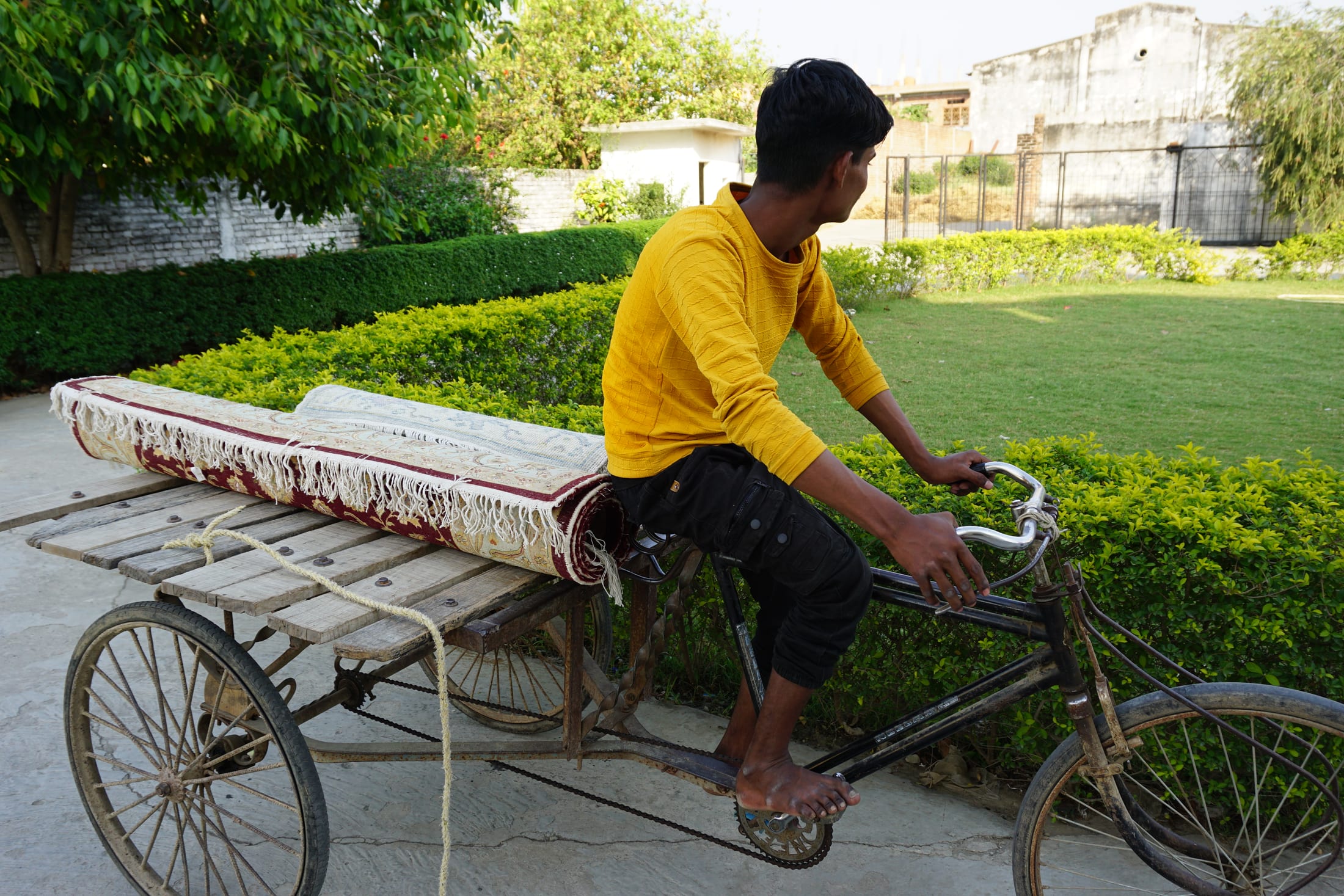
Buying a rug from India is far less complicated than it sounds, whether you are ordering one piece for your home or fifty for a project. The paperwork is standard, the routes are well travelled, and most of the work is done by the seller and the carrier. What follows is the plain version of how it works.
Two ways to buy
The first is to buy at a delivered price. The seller arranges the shipping and pays the import duty and taxes, and the rug arrives at your door with nothing further to pay. This is how orders placed on our website work: shipping is free worldwide, and customs duties and import taxes are included in the listed price.
The second is to import the goods yourself. The seller hands the shipment over at an agreed point — their workshop, the Indian port, or your destination port — and you, or a customs broker acting for you, clear it and pay the duty. Trade buyers moving larger quantities often prefer this, because they can use their own freight forwarder and reclaim taxes where the law allows.
Air or sea?
Air freight and express courier are measured in days. Rugs are rolled, wrapped and boxed or baled, and cost is driven by weight and volume, so air suits single rugs, samples and smaller orders — and anything with a deadline.
Sea freight is measured in weeks, port to port, with customs clearance and inland delivery on top. It costs far less per rug, which makes it the natural choice for volume: a share of a container for a modest order, or a full container for a large one.
The paperwork
The same four or five documents accompany almost every shipment.
| Document | What it is | Who prepares it |
|---|---|---|
| Commercial invoice | States the seller, buyer, description, quantity, value and terms. Customs uses it to assess duty. | Seller |
| Packing list | Lists each package with its contents, dimensions and weight. | Seller |
| Bill of lading or air waybill | The carrier's receipt and the contract of carriage. | Carrier or freight forwarder |
| Certificate of origin | Confirms the goods were made in India; some destinations need it for the correct duty rate. | Seller, through a chamber of commerce or export council |
| Import declaration | The customs entry in your country. | You or your customs broker |
How duties and taxes are worked out
Customs in your country classify the rug under a Harmonized System code — handmade carpets sit in Chapter 57 — and apply the duty rate for that code and country of origin to the declared value. In most countries VAT, GST or a similar tax is then charged on top.
We are deliberately not quoting rates here. They differ by country and by rug type, and trade measures change — duties on Indian goods have moved more than once in recent years. Check the current rate with your customs broker or your government's tariff lookup before you price an order. If you buy at a duties-included price, none of this is your concern.
Step by step
- Agree the specification, the price and the Incoterm, and receive a proforma invoice.
- Pay the deposit; the rug goes into production.
- Approve progress photos, then the final inspection photos.
- Pay the balance; the seller packs the goods and books the freight.
- The seller sends the shipping documents and a tracking or bill of lading number.
- The goods clear export customs in India and travel by air or sea.
- The shipment is cleared through import customs — by the carrier, your broker or the seller, depending on the terms.
- Delivery to your door, shop or warehouse. Unroll the rug and let it rest flat for a day or two.
Mistakes that cost money
- Comparing prices quoted on different Incoterms. A low ex-works price can end up costing more than a delivered one.
- Forgetting the tax charged on top of duty.
- Under-declaring value to save duty. It is illegal, and it leaves you uninsured if the shipment is lost.
- Ordering against a deadline without allowing for production time as well as transit time.
Frequently asked questions
- Do I have to pay customs duty on a rug from India?
- It depends on how you buy. If the seller ships at a duties-included (DDP) price, you pay nothing on delivery — this is how orders on shabnamoverseas.com work. If you import the rug yourself, you pay your country's duty and any VAT, GST or sales tax when it clears customs.
- How long does it take to ship a rug from India?
- By air or express courier, a rug typically arrives within about a week of dispatch. Sea freight takes several weeks plus customs clearance. Production time is separate: at Shabnam Overseas, standard pieces take 4–6 weeks to make and custom orders 8–12 weeks.
- Can an individual import a single rug from India?
- Yes. A single rug normally travels by courier, and the courier handles customs clearance on your behalf. Buying at a duties-included price is the simplest route for a personal purchase.