Buying Guide
What Does a Handmade Rug Cost — and Why?
Two rugs of the same size can differ in price many times over. Here are the seven things that decide what a handmade rug costs, and how to judge whether a price is fair.
· Shabnam Overseas
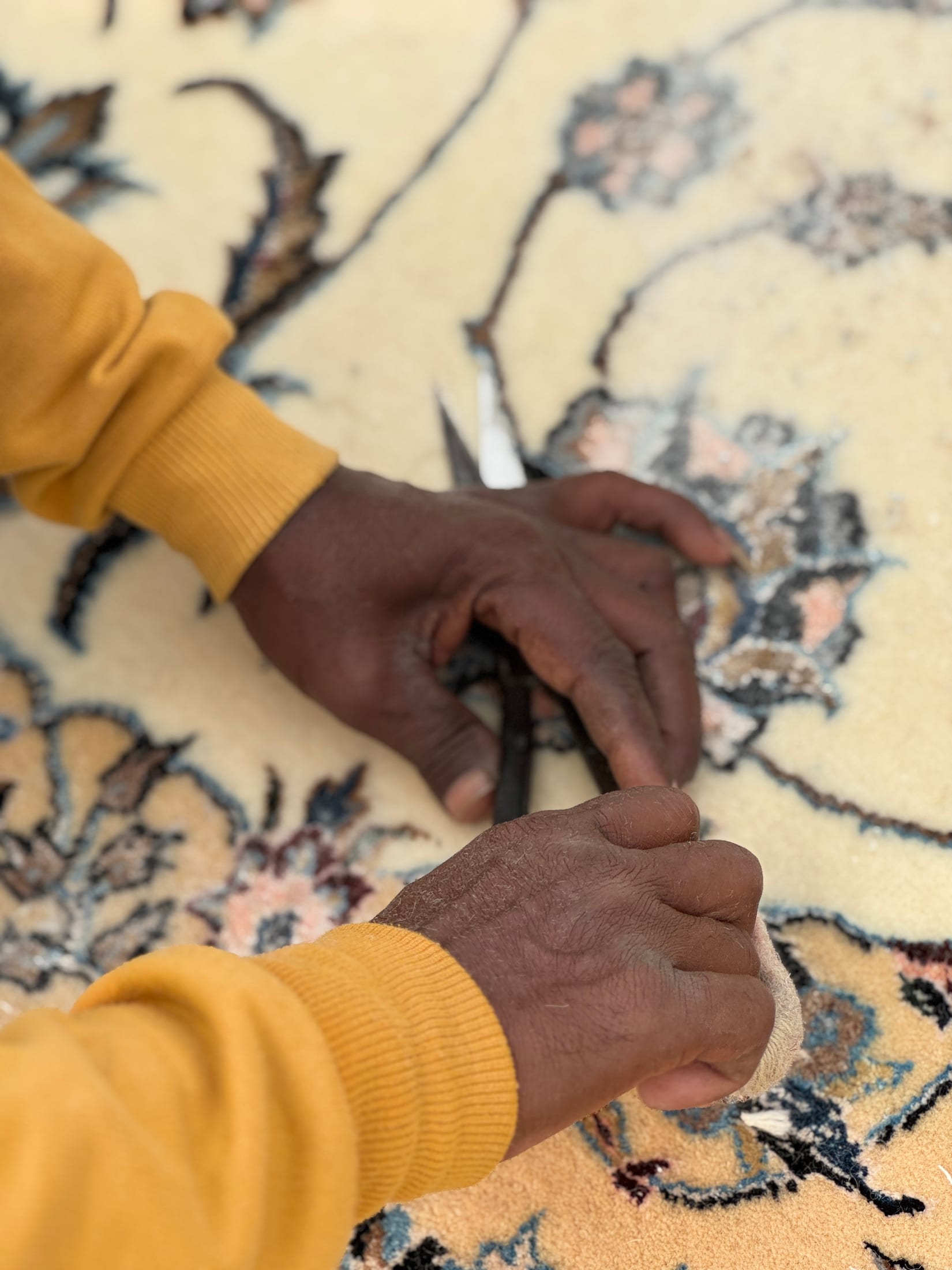
A handmade rug is priced, more than anything else, by the hours of skilled work in it. Materials matter, but time matters more. Once you know where the time goes, rug prices stop looking arbitrary.
The seven things that set the price
| Factor | Costs less | Costs more |
|---|---|---|
| Construction | Flat weave, hand-tufted | Hand-knotted |
| Knot density | Fewer, larger knots | More, finer knots per square inch |
| Material | Jute, cotton, standard wool | Fine wool, wool-silk blends, pure silk |
| Size | Smaller | Larger — price rises with area, and oversize rugs need wider looms |
| Design | Few colours, simple geometry | Many colours, fine curved detail |
| Finishing | Basic wash and shear | Special washes, hand-carving, hand-bound edges |
| Made to order | A standard size | Custom size, shape, colours or design |
Construction: where most of the cost lies
A skilled weaver ties roughly ten thousand knots a day. A large hand-knotted rug contains well over a million. That arithmetic is the price difference between a hand-knotted rug and a hand-tufted one, which is made by punching yarn through canvas and can be completed in a fraction of the time.
Knot density, and why more is not always better
Knot density is measured in knots per square inch (KPSI). The more knots, the finer the detail a design can carry and the longer the rug takes to weave. Indian workshops often quote density as a pair of numbers, such as 9/60, which convert to KPSI as shown below.
| Indian knot count | Approx. KPSI | Typical use |
|---|---|---|
| 5/40 | 50 | Bold, simple designs; thicker yarn |
| 7/52 | 90 | A good all-round quality for most designs |
| 9/60 | 130 | Fine detail and curved patterns |
| 12/60 | 180 | Very fine work, often with silk |
Higher is not automatically better. A chunky, tribal or Moroccan-style rug is meant to have a low knot count; a fine floral needs a high one to render its curves. The right density is the one that suits the design. What you should avoid is paying a fine-rug price for coarse work.
Material
Wool is the standard for good reason: it is resilient, takes dye beautifully and resists soiling. Finer, longer-fibred wool costs more and wears better. Silk is used for highlights or, in the finest rugs, for the whole pile; it adds sheen and detail and a good deal of cost. Jute and cotton are the most economical fibres and suit flat weaves and casual rooms.
One caution: "art silk", "bamboo silk" and "banana silk" are all names for viscose, a manufactured fibre. It looks lustrous when new but is far less durable than wool or real silk, and it should be priced accordingly.
What is included in the price
When comparing prices, check what each one covers. A lower figure that leaves you to pay freight, import duty and tax is often the higher one in the end. Our listed prices include worldwide shipping and all customs duties and import taxes, and every rug is made to order in the size you choose.
Think in cost per year
A rug that costs three times as much and lasts five times as long is the cheaper rug. That is the honest case for hand-knotted work: spread over the decades it will be in use, its cost per year is usually lower than that of the rugs you would otherwise replace along the way.
Frequently asked questions
- Why are hand-knotted rugs so expensive?
- Because of the time they take. Every knot is tied by hand — a skilled weaver ties roughly ten thousand a day, and a large rug contains over a million — so a single piece can take months to make before it is washed and finished.
- Is a higher knot count always better?
- No. A higher knot count allows finer detail and takes longer to weave, but the right density depends on the design. Bold, tribal and Moroccan-style rugs are meant to be coarsely knotted; fine florals need a high count.
- Is a wool rug worth the money?
- For most rooms, yes. Wool is resilient, springs back under furniture, takes dye well and naturally resists soiling. A good wool rug outlasts several made from synthetic fibres or viscose.